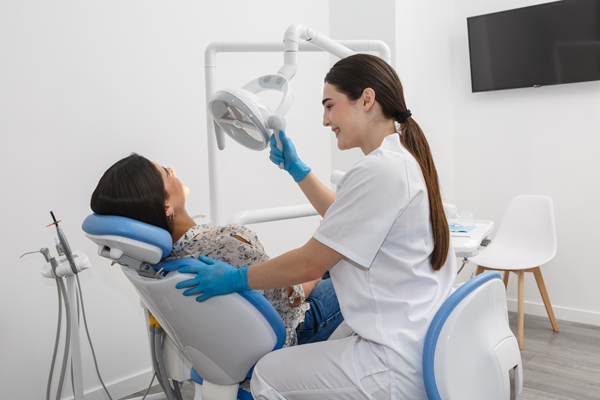
How Does In-Office Teeth Bleaching Work?
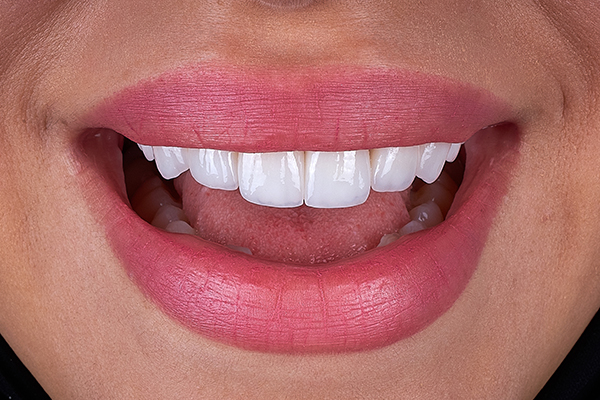
Teeth bleaching is one of the fastest and more straightforward ways to improve the appearance of your smile drastically. Many dentists provide teeth whitening in the office or as take-home kits, or even both. In-office teeth bleaching is more effective, safer and produces quicker results since it is done under the dentist’s supervision.
About in-office teeth bleaching
In-office teeth bleaching involves the use of bleaching agents which initiate an oxidizing process on the teeth to improve the teeth’s whiteness. It is possible to reveal a tooth’s natural shade by cleaning surface stains caused by extrinsic elements such as red wine, coffee, tobacco and tea. The accumulation of tartar and calculus on the teeth can contribute to teeth stains, which is why dentists typically recommend a deep cleaning, involving polishing and scaling.
While the process may be called bleaching, patients must know that the chemical used by the dentist for the procedure is not the same as the one used for whitening clothes. For in-office teeth bleaching, the dentist commonly uses two chemicals: hydrogen peroxide and carbamide peroxide.
Although the outer layer (the enamel) of the teeth is hard, it contains a lot of microscopic pores. The stains on the teeth occur when the compounds in foods or tobacco (from smoking) penetrate the pores and accumulate. Teeth bleaching with hydrogen peroxide initiates a chemical reaction that disintegrates the stain compounds.
Getting started with the treatment
The dentist will begin the procedure by examining the patient and asking about their dental and health history, including allergies and sensitivity. They will examine the hard and soft tissues of the oral cavity, the condition and the presence of restorations. The dental professional will use a whitening shade chart to measure the teeth’s color. The shade will determine the effectiveness of the procedure.
The dentist will place a protective layer on the gums to minimize the risk of irritation and chemical burns. For the procedure, the dentist will clean the teeth before applying a gel containing between 10 to 35% of hydrogen peroxide. In some cases, they may use a powerful light beam to accelerate the chemical reaction on the teeth. The chemical will remain on the teeth for several minutes before it is cleaned off. The process is repeated until the desired whitening shade is achieved. The entire bleaching process often takes between 45 minutes to one hour.
Important points to note
Teeth bleaching is not advisable for everyone. Since teeth bleaching is meant to remove stains on natural tooth enamel, patients who have dental restorations such as fillings or crowns should not undergo teeth whitening. Whitening agents are not effective on ceramic or porcelain material used to create the restoration, which means the treatment may result in mismatched tooth color.
Teeth bleaching is also not effective for tooth discoloration caused by changes inside the tooth, below the enamel layer, such as tooth stains from certain drugs. Therefore, it is advisable to undergo teeth bleaching under the supervision of a dentist.
In conclusion
To learn more about in-office teeth bleaching and if it works for you, book an appointment with a dentist for a consultation.
Request an appointment here: https://sexton-dental.com or call Sexton Dental at (740) 363-2080 for an appointment in our Delaware office.
Check out what others are saying about our services on Yelp: Teeth Bleaching in Delaware, OH.
Recent Posts
Professional teeth whitening creates a brilliant first impression that boosts confidence during every social and professional interaction. Maintaining this new glow requires a bit of strategy, especially in the first 48 hours when the teeth remain extra absorbent. A few simple changes to daily habits protect the investment and keep the smile looking fresh for…
If you are concerned with discoloration of your teeth, then you may benefit from professional teeth whitening. It is a safe, effective, and quick way to remove minor to moderate stains on teeth and make teeth whiter. Understanding what to expect and how long the results last can help you determine whether treatment is appropriate.The…
One of the most common side effects of teeth whitening treatments is increased sensitivity to hot and cold foods and beverages. This typically lasts for a few days after the treatment, but it should eventually go away.Teeth whitening treatments are a fast way to improve the way teeth look. It can increase their whiteness by…
As cosmetic dentistry continues to rise in popularity, teeth bleaching continues to be one of the most sought-after cosmetic treatments. Patients want to achieve a Hollywood-worthy smile that is bright and white. With so many products on the market, it can be difficult for patients to know what is right for their situation and what…